Mastering the Walk: How to Train Your Dog to Walk Nicely on a Loose Leash
Are your daily walks with your dog turning into a tug-of-war battle? Don't worry, you're not alone! Many dog owners struggle with teaching their furry friends to walk nicely on a leash without pulling. But fear not—I’m here to help you master the walk and turn your outings into enjoyable experiences for both you and your canine companion.
In this blog post, I'll share effective techniques and step-by-step training tips for teaching your dog to walk politely on a loose leash. From proper leash handling to positive reinforcement techniques, you'll learn how to communicate with your dog and encourage desirable walking behavior.
Say goodbye to pulling, tugging, and frustration, and say hello to leisurely strolls with your well-behaved pup by your side. Let's dive into the world of loose leash walking training and unleash the joy of stress-free walks with your furry friend!

The Struggle is Real…
The number one goal of most dog owners is to enjoy a walk together without the constant tugging, struggling and being dragged off-course. They want to be the “dream team”. You’ve seen them – those calm dogs who walk nicely by their person’s side. I mean, the person is so relaxed they could even enjoy a conversation with a friend!
You want to experience that with your dog, but he simply will not cooperate! The struggle is real for many pet owners and alas, they eventually cave, giving control to the dog and leaving you, the one who pays Fido’s bills, in tow. No fun!
Besides being a literal drag for the owner, it can also become dangerous if the dog pulls toward traffic, other dogs, or potentially dangerous situations. Before getting into seven proven ways to stop your dog from pulling on walks, it’s important to understand why they do it.
Why do dogs pull on walks in the first place?

Does your dog pull on the leash? Here are seven tips to make walking your dog more enjoyable.
According to Cesar Milan, dogs explore the world with their noses first, then their eyes and lastly their ears. What does that mean for you? Well, it means that all the interesting smells along your walk will tempt your dog to pull you off the path because he wants to explore! After scent, dogs rely on their sight – they see critters, other dogs, people or cars and it’s exciting! They must learn more! The third sense in the hierarchy of a dog’s senses is sound.
Notice that I mentioned ears LAST. Uh oh…that’s not great for people who rely on their voice as their primary form of communication.
The smells, sights, and sounds encountered on a walk can quickly result in an over-excited dog – the #1 reason dogs pull on a leash. The dog gets excited, their owner tells them to stop, says their name over and over, or pulls on the leash to get them to stop. But it doesn’t work! Why? Because all of these actions actually ADD to the dog’s excitement level. On top of all of this, the daily walk is typically the dog’s favorite part of the day. Maybe you’ve been working all day, busy with chores, or shuttling human kids around. Your dog looks forward to this walk and becomes overly excited when they know it’s time. What are your cues that it’s time for a walk? Do you get excited, change the pitch of your voice, talk faster or in “baby talk”? Do you make a production about putting on the leash for the walk? All of these actions impact your dog’s energy level.
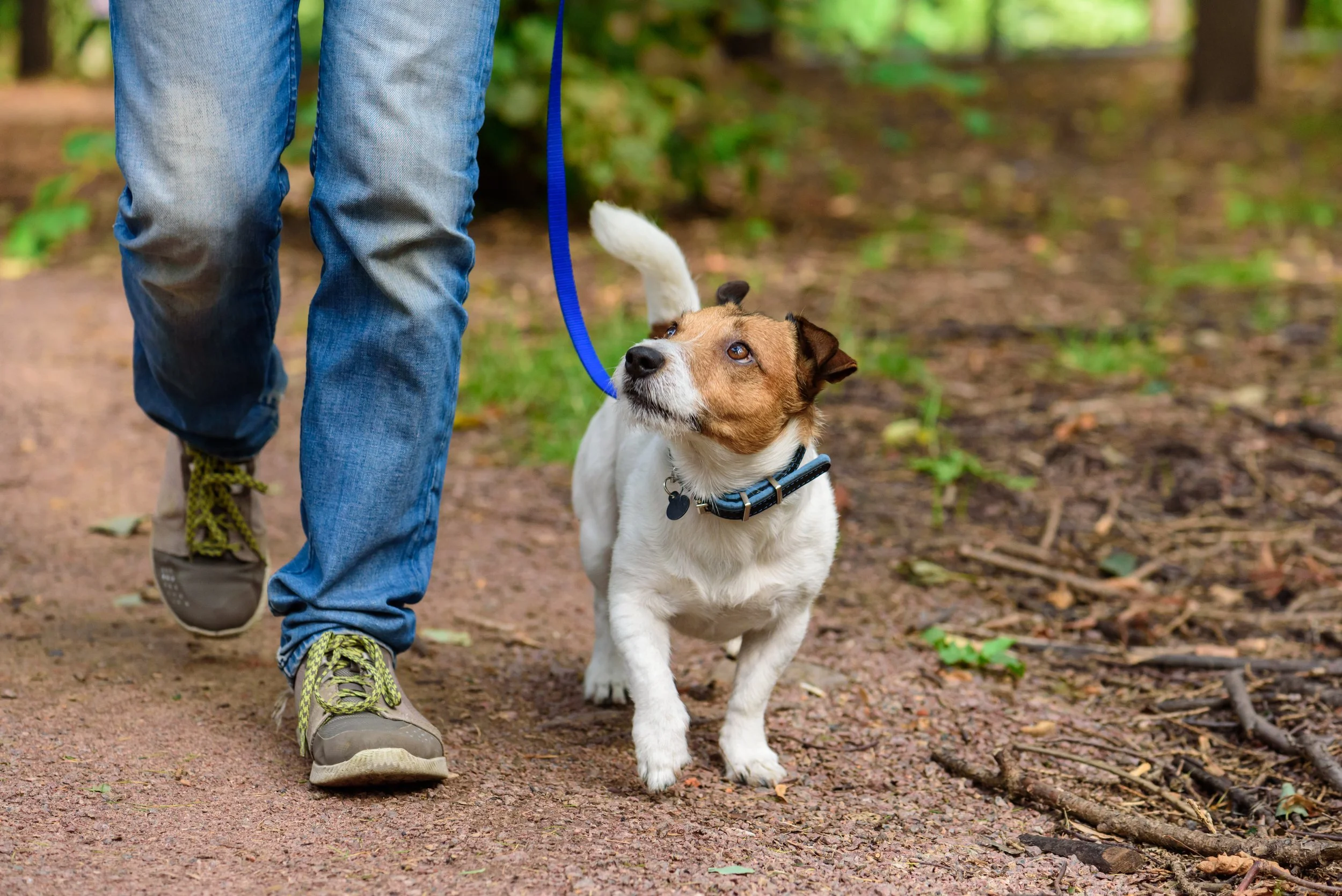
Start enjoying walks with your dog with these proven tips:
Control your dog’s excitement level. This starts BEFORE your dog even knows he’s going for a walk. When it’s time for a walk, calmly gather the equipment you need. Put your dog’s collar and leash on without talking…not a peep! Cesar Milan says, “no touch, no talk, no eye contact” is the best way to meet a new dog and I think it applies in this situation as well. Of course you are not meeting a new dog – it’s your dog. But the concept of approaching your dog calmly without excitement, baby talk or amping up the dog will help to set the tone for your walk.
The collar should be well-fitted near the top of your dog’s neck. Many people swear by harnesses, but I have found that a harness does little to STOP the pulling, it just distributes the dog’s strength. Sure, it eases pressure from a pulling dog’s trachea – but if you teach your dog to walk politely on a leash, a harness is unnecessary. Two things to keep in mind when it comes to harnesses, and I why I do not recommend them — Harnesses do very little to control the dog’s senses (their nose, eyes and ears) and how they explore the world. When you have control over what the dog’s head is doing, you have more control over the dog. Also, harnesses were created for working dogs whose job it is to pull heavy things or military, police and search dogs who are trained to use their noses for a specific purpose. Harnesses work in these situations because the handler does not want to pull them off a scent trail (also, these dogs are highly trained and really not comparable to most pet dogs). There are “no-pull harnesses” on the market that some pet owners have found to be effective. Find what works best for your dog or use what is recommended by your dog’s trainer, if you have hired a professional trainer.
Use a short leash that is 4 to 6 feet in length. A nice leather leash works best because it’s comfortable in your hands and can easily be reined in or more slack can be given seamlessly. I strongly discourage flexi-leads for dog walks because your control and reaction time will be extremely limited.
When getting started, choose safe locations with minimal distractions and keep your walks short – 10 to 15 minutes in the beginning. Gradually increase the length of your walks and find areas that are incrementally more and more distracting for your dog. But do this gradually – there is no rush!
Start the walk like a boss! You are the leader, so stand up straight with your gaze forward and walk with intent. This sets the tone and sends a message to your dog that you are in charge and not the other way around.
Just turn in the opposite direction. The first few times you try this, your dog will revert to old habits and start pulling. Rather than pulling on the dog, or telling him words, just turn in the opposite direction. You may need to do this a lot in the beginning and your neighbors could think you’re losing it, but it works because it causes your dog to start focusing on you instead of the environment.
Start-and-Stop. Another method that has worked well for me is the “start and stop” method. It’s quite simple and the concept is similar to the turn-around method. This has been my tried-and-true method for getting every dog I’ve ever known to walk nicely with me. It takes some time…and patience…so keep at it and soon you, too, will have a model dog that can politely walk on a leash anywhere!